Respectful Relationships
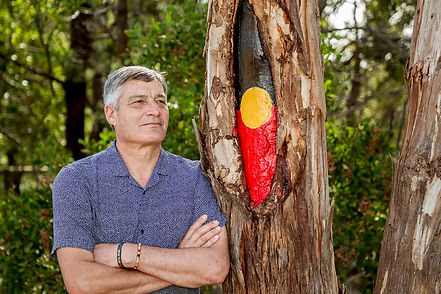
"Philanthropy has a vital role in creating (a) glad tomorrow for us Aboriginal peoples. We ask you, philanthropy, to listen to us deeply, to practice dadirri, and walk beside us as friends, partners and co-imaginers. We want philanthropy to understand, and even enter, our dreaming..."
Peter Aldenhoven, Willum-Warrain Gathering Place, Hastings
The Biggest Problems
We use this term to describe all the activities we engage in with First Nations communities. It is our essence. We exist to provide the Aboriginal Partnership Program. The specifics are described in the Woor-Dungin Model.
In the past, Woor-Dungin developed an exclusive relationship with 5 ACCOs and the term Partner was used to describe the relationship.
Currently our relationships encompass a large number of ACCOs throughout Victoria with a goal of generating increasing interest among ACCOs not yet participating in the Program.
Thus, the growth of the Program and the growth of Woor-Dungin are intertwined. Increasing the involvement of the larger Victorian community to join us in Walking With First Nations communities is the best path to a positive future for all.
We host workshops with groups of ACCOs in order to provide training on topics of general interest or to develop coalitions when communities have identified issues for which advocacy is necessary. Woor-Dungin also provides an Aboriginal developed and led workshop “Decolonising Wealth, Cultural Audit Toolkit" and other resources to facilitate philanthropy’s utilisation of a decolonised approach to working with First Nations peoples.
We simultaneously work with mob in developing the skills needed to secure philanthropic funds.
From our experience, we have summarised the seven biggest problems with the way traditional philanthropy approaches support for Aboriginal organisations:
-
The written application process can be confronting and the language used intimidating.
-
Timelines are often too inflexible to accommodate Aboriginal cultural needs.
-
Donors and trustees rarely visit Aboriginal communities to meet with Elders face-to-face, or allow their program managers to do a site visit to Country, preferring to commission research then listen to a briefing. This is deemed disrespectful by Aboriginal people.
-
Most philanthropy is outcomes driven: What have we achieved? The important thing to Aboriginal communities is the process: Have we done this the right way?
-
Funding is often allocated to applications that offer a predetermined outcome, whereas community-driven initiatives often have a life of their own and are stronger for this iterative approach.
-
Few trusts and foundations are willing to take a long-term view, or work within a framework that does not dictate what the outcomes should look like.
-
Many donors and trustees are unsure how to engage with Aboriginal groups, or how to ask difficult but important questions without offending. The complexities of the cultural and political sensitivities can seem daunting.
On the other hand, where philanthropic foundations and trusts take a longer view, show greater willingness to be flexible about funding criteria and timelines, and work hard to establish the trust needed to build enduring, respectful relationships with Aboriginal community-controlled organisations, then the results for all parties are more effective and more satisfying. Most importantly, the outcomes are better for the Aboriginal communities the grants are allocated to assist.
The Respectful Relationships program aims to support philanthropy’s capacity to do this in partnership with Aboriginal community-controlled organisations. Woor-Dungin is excited to be involved in helping to guide this important change.